
| Search PNC News for stories of people and churches in our UCC Conference: |
|---|
2023-12-05
Indigo Brown is moderator of the PNC Board
Conference moderator Indigo Brown seeks to improve connections in the PNC-UCC Conference through using virtual tools. She also seeks to help re-invigorate anti-racism efforts throughout the conference.
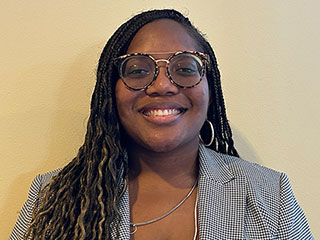 |
Indigo Brown of Plymouth UCC in Seattle is guiding the PNC Board through a time of transition in leadership and addressing anti-racism. |
Being in the “millennial-Gen Z” age range, she is self-taught in communicating with a cell phone, learning technology and videography. She has also been immersed in civil rights and anti-poverty efforts through participating in four of Plymouth UCC’s summer civil rights trips and being involved in the state with the Poor People’s Campaign National Call for Revival.
In 2003, Indigo, who is 26, came to Seattle when she was six years old, when her mother, Kelle Brown, now pastor at Plymouth UCC, came to study for a master of divinity degree at Seattle University’s former School of Theology and Ministry.
Indigo’s early years were in Georgia and Virginia.
Since graduating from high school in 2014, she studied for a bachelor’s degree at the University of Washington in ethnic studies with an emphasis on African American studies, graduating in 2021.
Indigo works for the Office of the Superintendent of Public Instruction in Seattle. Her focus is on elementary school content to support schools and teachers on multicultural education related to math and science curricula.
Through Plymouth, Indigo has been involved with the PNW-UCC Conference, along with helping with church events.
Former moderator Wendy Blight, a Plymouth member, invited Indigo to serve on the Conference Board, beginning in 2021 when Hillary De La Cruz was moderator.
When Indigo started, there was a contentious, virtual Annual Meeting, she said. Out of it, the PNC Anti-Racism Fund was established. On behalf of the Board, Indigo and board member Danette Koloi, serve on that task force, which includes clergy of color who make decisions about use of the funds.
“We have spent time to report on how the funds are spent, working with the Communities of Practice and Stewardship,” Indigo said.
“Now, even without a full-time conference minister and as we search for an intentional interim conference minister, the PNW Conference is doing a lot,” she said, adding that the search committee is in the process of reviewing its second round of candidates.
“We are also re-activating the Justice Witness Ministries Committee and the Outdoor Ministries Committee,” she said, adding a desire to offer more conference-wide events than Annual Meeting.
She said there are efforts to explore more events through the year and use social media platforms, so the conference stays more connected.
The PNC is also moving forward to reinvigorate the Anti-Racism Fund, taking advantage of the call from the national UCC General Synod in Indianapolis this summer to recognize its stream of Afro- Christianity, said Indigo, who attended the synod meeting.
At Synod, John Dorhauer, outgoing president and general minister, apologized for the denomination’s failure to recognize the Afro-Christian Convention as the “fifth stream” involved in its founding the UCC along with the Congregational, Christian, Evangelical and Reformed traditions. He asserted that lack of recognition was “a white supremacist rewriting of our history and a sin.”
Then Yvonne Delk, an ordained UCC pastor and national leader from the Afro-Christian Convention heritage, told of the history of that tradition as part of the UCC.
The Synod also announced that Karen Georgia Thompson would be the 10th general minister and president, the first woman and the first woman of African descent to serve as leader of the denomination. She earned her doctorate in ministry at Seattle University.
“We in our churches are all on individual journeys toward anti-racism,” Indigo said. “The PNW Conference seeks to give people the tools and confidence to do their own work, because we will not all work in the same way.”
She noted that many churches have done book studies, and she invites churches to explore what actions they might also take.
“We each need to start somewhere,” she said. “Anti-racism work can include who we have been, who we are and what churches can be doing.”
Indigo, for example, has been learning about and involved with civil rights efforts for several years.
As part of William Barber’s and Lisa Theoharis’ Poor People Campaign, she has talked with Senator Pramila Jayapal about needed legislation, including a resolution to eradicate poverty nationwide, introduced in June.
Indigo is on the state’s Coordinating Committee for the Poor People’s Campaign and her mother, Kelle, is one of the tri-chairs for the state campaign.
“I work to inform people about it, participate in marches or stand on the steps of the Capital in Olympia,” said Indigo, admitting to being spread thin.
She also serves on the Plymouth Healing Communities to provide housing and companionship for those in Seattle who suffer homelessness and mental health struggles. She joined in a Night of Hope fundraising event Sept. 21 and looks forward to volunteering.
Another involvement is with the Maxine Nimms Academy, started by Evergreen College in Tacoma to expand educational opportunities for youth.
This summer, she joined in a “Let the Strings Speak” string concert inviting African Americans to learn to play strings. She learned to play bass.
For four summers since she was 11, Indigo joined in civil rights trips with Plymouth UCC to Georgia, Alabama and Tennessee hotspots for civil rights history. Through the Equal Justice Museum, the groups visited sites where Martin Luther King Jr spoke, the motel where he was shot and the church where four girls were killed in a bombing.
“We talked with Edward Wood the last freedom rider who told of his experiences,” she said.
“These trips have been a time to see what happened and think about how we can move forward,” she said. “I know some things stay the same, but we can learn how we can continue to create change. It’s empowering, looking back while we move forward so we do not repeat the past.
“Marches worked in the past, but today we can do much virtually to put the issues before people. For example, someone created an app people can use when pulled over so that the police can talk to an attorney,” Indigo. “If one way does not work, we need to figure another way.
“We must be resilient, so we get up and start anew,” she added.
Indigo brings skills in social media and virtual technology as tools to share power and to make actions go viral so they get traction with people around the world.
For example, through the Poor People’s Campaign, people can join efforts to send emails to Senators and Representatives.
“If they get 900 emails calling for a change in laws, they may become irritated enough to read them and act,” she said. “We continue to try to figure different ways to do actions to get in people’s faces, hands and pockets.”
Indigo said she had no social media training but grew up with cell phones being part of who she is. She is self-taught in editing videos and doing tech work.
“It’s fun and a challenge,” she said. “I like to problem solve and figure things out.
“We need more tech and videography to spread information as a church,” she said.
“Church has been part of my community all of my life,” she said. “I have done much to support my mother in the church. I enjoy participating in worship and doing justice work. It’s ingrained in my life.”
Indigo said that Plymouth is becoming a more diverse and multiracial church, with many new members being people of color, LGBTQIA and people who are differently abled.
Indigo hopes to start office hours for members of the conference who want to talk to her as PNC moderator, like they do with the acting conference minister.
For information, call 206-422-6085 or email indigo.brown@outlook.com.
Share this article on your favorite social media 